Cottage Cheese Cake is a light, creamy, and protein-packed dessert that proves healthy treats can still taste amazing. Unlike traditional cheesecake that relies heavily on cream cheese and sugar, this Cottage Cheese Cake uses blended cottage cheese to create a smooth, rich texture while keeping calories and carbs lower. The result is a satisfying dessert that feels indulgent but fits perfectly into a balanced lifestyle.
This recipe is especially popular among people looking for high-protein desserts, low-carb sweets, or lighter cheesecake alternatives. With simple ingredients and an easy preparation method, Cottage Cheese Cake can be made even by beginner bakers. The cake bakes into a soft, slightly jiggly center with golden edges and a delicate vanilla aroma. Topped with fresh berries or fruit coulis, it becomes a beautiful and nourishing dessert for any occasion.
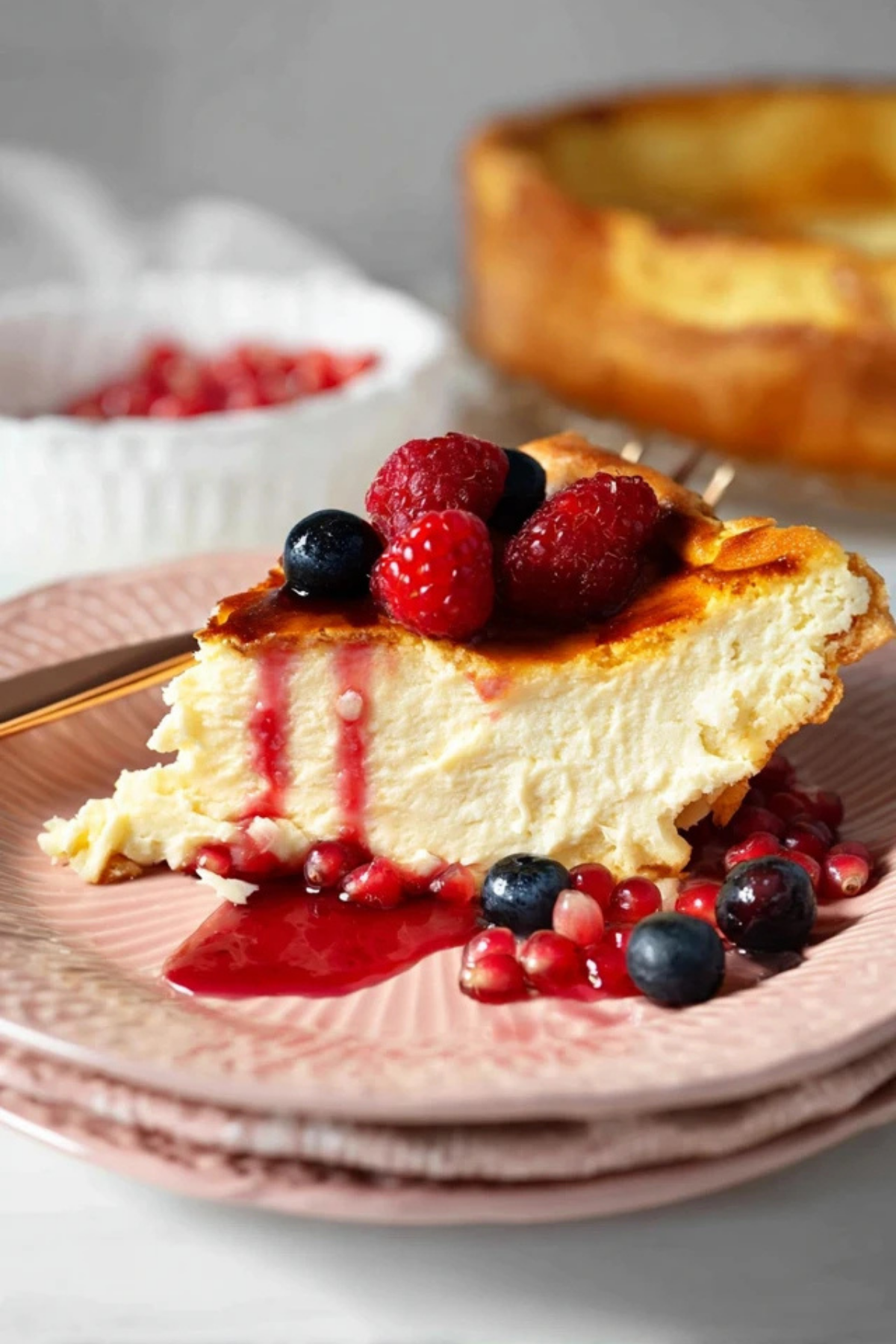
Table of Contents
Why This Cottage Cheese Cake Is So Popular
Cottage Cheese Cake has gained attention because it combines indulgent flavor with impressive nutrition. The use of cottage cheese instead of cream cheese dramatically increases protein while lowering fat and calories.
One slice of Cottage Cheese Cake can provide a solid amount of protein, making it a great dessert for people following high-protein, low-carb, or balanced diets. Cottage cheese is naturally rich in calcium and contains slow-digesting casein protein, which helps keep you full longer.
Another advantage of this Cottage Cheese Cake recipe is its simplicity. Unlike classic cheesecake recipes that require crust preparation, water baths, and complicated mixing methods, this version is crustless and blended in minutes. The batter comes together quickly in a blender or food processor, then the oven does the rest.
The texture is smooth and creamy with a gentle cheesecake-like consistency. Because cottage cheese becomes silky when blended, the final Cottage Cheese Cake tastes far more luxurious than you might expect from such simple ingredients.
Ingredients
The beauty of this Cottage Cheese Cake recipe is that it requires only a handful of ingredients. Each component plays a key role in creating the cake’s structure, flavor, and creamy texture.
• Cottage Cheese: The star ingredient that provides protein, moisture, and creamy texture when blended smooth.
• Eggs: Essential for structure and firmness. Eggs help the Cottage Cheese Cake set properly while keeping it tender.
• Granulated Sweetener or Sugar: Adds sweetness and balances the tangy flavor of cottage cheese.
• Vanilla Extract: Enhances the overall dessert flavor and adds warm aromatic notes.
• Almond Extract: Provides a subtle nutty sweetness that deepens the flavor profile.
• Cornstarch: Helps stabilize the batter and improves the cake’s structure.
• Lemon Juice: Adds brightness and balances the richness of the cheese.
• Salt: A small amount enhances sweetness and highlights the vanilla flavor.
• Berry Coulis (for serving): A fruity topping that complements the creamy Cottage Cheese Cake beautifully.
Alternative Ingredient Suggestions
Flexibility is one of the reasons this Cottage Cheese Cake recipe works for many diets and preferences. Several ingredients can be swapped without affecting the final result too much.
If you prefer a lower-fat version, use low-fat cottage cheese instead of full-fat cottage cheese. The texture remains creamy, though slightly lighter.
For a grain-free version of Cottage Cheese Cake, replace cornstarch with arrowroot powder or tapioca flour. Both options work well to stabilize the batter.
Sweeteners can also vary depending on dietary preferences. You can use erythritol, allulose, stevia blends, or traditional sugar. Natural sweeteners like coconut sugar also work but will slightly darken the cake.
If almond extract is unavailable, simply increase the vanilla extract slightly for extra flavor. Citrus lovers can also swap lemon juice for lime or orange juice to add a different flavor twist to the Cottage Cheese Cake.
Step-by-Step Instructions
- Preheat your oven to 350°F (180°C). Lightly grease a 9-inch pie dish or baking dish using butter or coconut oil. This prevents the Cottage Cheese Cake from sticking and helps the edges brown nicely.
- Add the cottage cheese, vanilla extract, almond extract, lemon juice, sweetener, cornstarch, and salt into a blender or food processor. Blend the mixture until completely smooth. This step is essential because blending removes the natural curds from the cottage cheese and creates the creamy base for the Cottage Cheese Cake.
- If the mixture seems thick, pause and scrape down the sides of the blender to ensure everything blends evenly. Continue blending until the batter looks silky and uniform.
- Transfer the blended mixture to a large mixing bowl. Crack the eggs separately and whisk them into the batter one at a time. Mix gently until each egg is fully incorporated. Avoid overmixing, which can affect the texture of the Cottage Cheese Cake.
- Pour the batter into the prepared baking dish. Smooth the surface using a spatula so the cake bakes evenly.
- Place the dish on the center rack of the oven and bake for about 45 minutes. The edges of the Cottage Cheese Cake should appear set and lightly golden, while the center should remain slightly jiggly.
- Remove the cake from the oven and allow it to cool at room temperature for about one hour. During this time, the cake will continue to set.
- Cover the dish with plastic wrap and transfer it to the refrigerator. Chill the Cottage Cheese Cake for at least three hours, though overnight chilling produces the best texture.
- Once chilled, slice the Cottage Cheese Cake directly from the dish and serve with berry coulis, fresh fruit, or whipped cream.
Tips for the Best Cottage Cheese Cake
Making Cottage Cheese Cake is simple, but a few helpful tips can ensure the best results every time.
Always blend the cottage cheese thoroughly. If small curds remain, the texture of the finished Cottage Cheese Cake may feel grainy instead of smooth.
Use room-temperature eggs when mixing the batter. This helps the eggs combine more easily and prevents the batter from separating.
Do not overbake the Cottage Cheese Cake. The center should still jiggle slightly when you remove it from the oven. The cake will firm up as it cools and chills.
Allow enough chilling time. Refrigerating the Cottage Cheese Cake helps it fully set and develop its creamy cheesecake-like consistency.
If you notice some moisture forming at the bottom of the dish after refrigeration, simply place paper towels under leftover slices when storing them. This helps absorb extra liquid without affecting the cake’s flavor.
Pairing Ideas and Flavor Variations
One of the best things about Cottage Cheese Cake is how easy it is to customize. The mild vanilla base pairs beautifully with many toppings and flavor additions.
Fresh berries are a classic topping. Blueberries, raspberries, strawberries, and blackberries add color and natural sweetness to Cottage Cheese Cake.
Fruit sauces also work wonderfully. Berry coulis, mango puree, or peach compote create a bright contrast against the creamy cake.
Chocolate lovers can drizzle melted dark chocolate over slices of Cottage Cheese Cake for a richer dessert. A light dusting of cocoa powder also adds depth.
For a more indulgent presentation, serve the Cottage Cheese Cake with whipped cream and toasted nuts. The combination of creamy, crunchy, and fruity textures makes every bite more interesting.
Some bakers prefer turning this recipe into a more traditional cheesecake. You can add a crust made from almond flour or crushed graham crackers mixed with butter. Bake the crust first, then pour the Cottage Cheese Cake filling on top and bake as directed.
Health Benefits
Another reason Cottage Cheese Cake has become popular is its impressive nutritional profile compared with traditional cheesecakes.
Cottage cheese is naturally rich in protein, calcium, and B vitamins. When used as the base of a dessert, it turns an ordinary cake into a more satisfying and balanced treat.
A slice of Cottage Cheese Cake typically contains far fewer calories and less sugar than classic cheesecake recipes. Because of the protein content, it can help keep you fuller longer, making it easier to enjoy dessert without overeating.
For people following high-protein diets, low-carb eating plans, or balanced nutrition goals, Cottage Cheese Cake offers a way to enjoy dessert while still prioritizing wholesome ingredients.
Storage and Make-Ahead Tips
Cottage Cheese Cake stores well, making it an excellent dessert for meal prep or gatherings.
Keep leftover Cottage Cheese Cake in an airtight container in the refrigerator. It stays fresh for about three to four days.
For best results, store slices separated by parchment paper or absorbent paper towels to prevent excess moisture from collecting.
Freezing Cottage Cheese Cake is generally not recommended. After thawing, the texture can become watery due to the high moisture content of cottage cheese.
If you want to prepare the dessert in advance, bake the Cottage Cheese Cake the day before serving. Overnight refrigeration improves both the flavor and the creamy texture.
Because this dessert is light yet satisfying, it works perfectly for dinner parties, healthy snack options, or even a protein-rich breakfast treat.
Cottage Cheese Cake proves that simple ingredients can create a delicious and nourishing dessert. With its creamy texture, gentle sweetness, and high protein content, this recipe offers a modern twist on traditional cheesecake that fits perfectly into today’s healthier cooking style.
Conclusion
Cottage Cheese Cake is a simple yet impressive dessert that blends nutrition and indulgence into one creamy slice. By using cottage cheese instead of traditional cream cheese, this recipe creates a lighter, high-protein dessert that still delivers the smooth texture and rich flavor people love in cheesecake. The ingredients are straightforward, the preparation is easy, and the results are consistently delicious.
What makes Cottage Cheese Cake especially appealing is its versatility. It can be served plain, topped with fresh berries, drizzled with fruit coulis, or paired with whipped cream for a more decadent treat. You can also experiment with citrus flavors, chocolate toppings, or even a nut-based crust to create a personalized variation.
Because this Cottage Cheese Cake is naturally high in protein and relatively low in sugar, it fits well into balanced diets while still satisfying dessert cravings. It works beautifully for family gatherings, healthy meal prep desserts, or an elegant treat after dinner.
With its creamy texture, delicate sweetness, and simple preparation, Cottage Cheese Cake proves that healthy baking can still feel indulgent. Once you try it, this recipe will likely become a regular addition to your dessert rotation.
Frequently Asked Questions About Cottage Cheese Cake
Can you really make a creamy cake with cottage cheese?
Yes, you can absolutely make a creamy Cottage Cheese Cake. The key is blending the cottage cheese thoroughly before mixing the batter. When processed in a blender or food processor, cottage cheese becomes smooth and silky, removing the curd texture completely. This creates a cheesecake-like consistency that is surprisingly rich and creamy.
Is Cottage Cheese Cake healthier than traditional cheesecake?
In many cases, Cottage Cheese Cake is considered a healthier alternative to traditional cheesecake. Cottage cheese contains more protein and less fat than cream cheese, which helps reduce overall calories while increasing nutritional value. Many Cottage Cheese Cake recipes also use reduced sugar or natural sweeteners, making them suitable for high-protein or lower-carb diets.
How do you prevent Cottage Cheese Cake from becoming watery?
To prevent excess moisture, always blend the cottage cheese well and bake the cake until the edges are set while the center remains slightly jiggly. After baking, allow the Cottage Cheese Cake to cool at room temperature and then refrigerate it for several hours or overnight. Proper chilling allows the cake to firm up and improves its texture.
More Relevant Recipes
- Easy Cottage Cheese Peanut Butter Mousse Recipe
- Easter Rice Krispie Treats: Easy No-Bake Holiday Dessert
- Easy Limoncello Bars Recipe
Cottage Cheese Cake
- Prep Time: 10 minutes
- Cook Time: 45 minutes
- Total Time: 55 minutes + chilling time
- Yield: 8 slices 1x
- Category: Dessert
- Method: Baking
- Cuisine: American
- Diet: Gluten Free
Description
Cottage Cheese Cake is a creamy, high-protein dessert made with blended cottage cheese, eggs, and vanilla. This easy baked cake has a smooth cheesecake-like texture while being lighter and lower in calories than traditional cheesecake. Perfect served with fresh berries or berry coulis, it’s a simple healthy dessert that fits a balanced lifestyle.
Ingredients
- 3 1/2 cups full-fat cottage cheese
- 4 large eggs
- 2/3 cup granulated sweetener or sugar
- 2 teaspoons vanilla extract
- 1/2 teaspoon almond extract
- 1 tablespoon cornstarch
- 1 tablespoon lemon juice
- 1/4 teaspoon salt
- 1/3 cup berry coulis (for serving)
- Fresh berries for garnish (optional)
Instructions
- Preheat the oven to 350°F (180°C) and grease a 9-inch pie dish or baking dish with butter or coconut oil.
- Add the cottage cheese, vanilla extract, almond extract, lemon juice, sweetener, cornstarch, and salt to a blender or food processor.
- Blend until the mixture becomes smooth and creamy with no visible curds.
- Transfer the blended mixture to a large mixing bowl.
- Whisk in the eggs one at a time until just combined. Avoid overmixing the batter.
- Pour the batter into the prepared baking dish and smooth the top with a spatula.
- Bake for about 45 minutes until the edges are set and golden while the center remains slightly jiggly.
- Remove the cake from the oven and allow it to cool at room temperature for about 1 hour.
- Cover and refrigerate for at least 3 hours or overnight so the cake firms up.
- Slice and serve chilled with berry coulis and fresh berries if desired.
Notes
- Blend the cottage cheese thoroughly to achieve a smooth cheesecake-like texture.
- Use room temperature eggs for easier mixing.
- The center of the cake should still jiggle slightly when removed from the oven.
- Chilling the cake overnight improves both texture and flavor.
- Store leftovers in an airtight container in the refrigerator for up to 4 days.
- Freezing is not recommended because the texture may become watery after thawing.
Nutrition
- Serving Size: 1 slice
- Calories: 107 kcal
- Sugar: 2.2 g
- Sodium: 318 mg
- Fat: 5.1 g
- Saturated Fat: 1.9 g
- Unsaturated Fat: 3.1 g
- Trans Fat: 0.01 g
- Carbohydrates: 3.6 g
- Fiber: 0.01 g
- Protein: 10.7 g
- Cholesterol: 86.9 mg