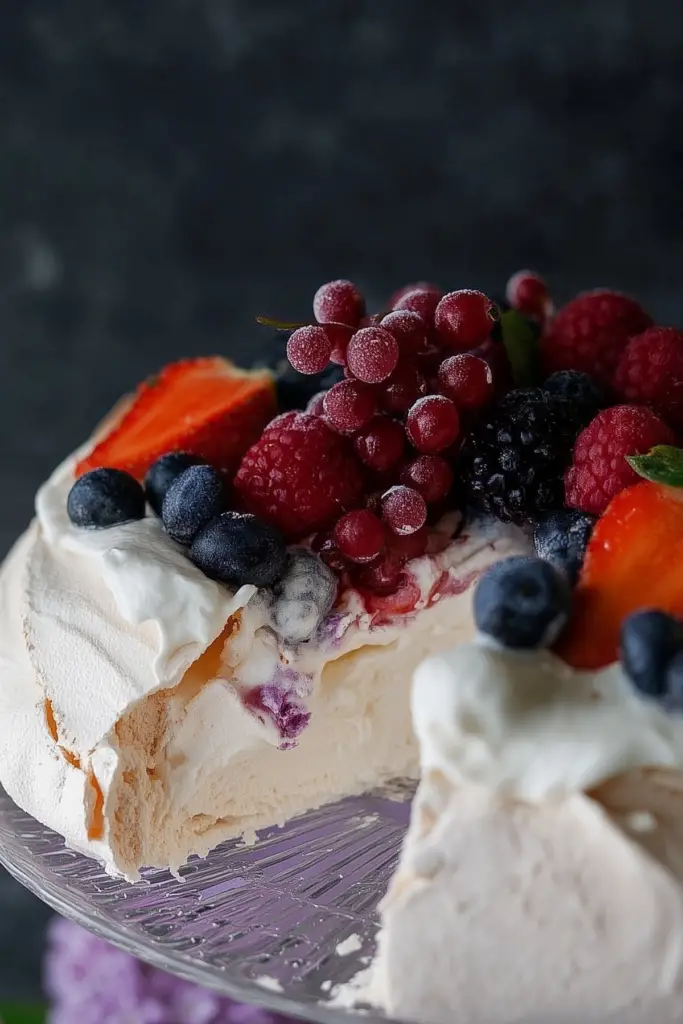
Pavlova is a light, airy dessert that feels both elegant and approachable, making it perfect for any occasion. This pavlova recipe highlights a crisp meringue shell with a soft, marshmallow-like center, topped with a vibrant strawberry rhubarb mixture and fresh mint. If you’re looking for a show-stopping dessert that balances sweetness with a hint of tartness, this pavlova is the perfect choice. Whether for summer gatherings or special celebrations, this recipe delivers a bakery-quality dessert right at home.
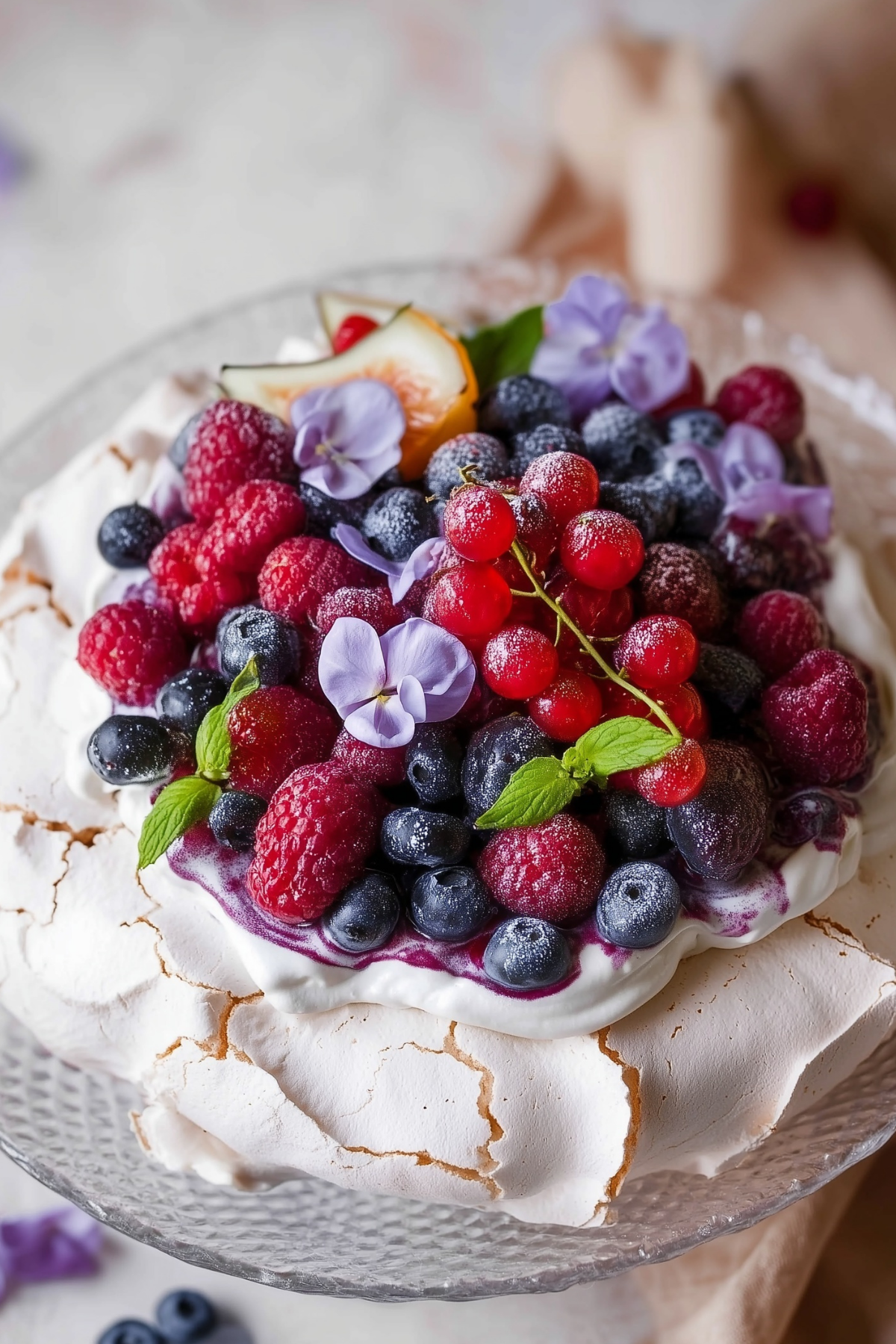
Table of Contents
Why This Pavlova Recipe Stands Out
This pavlova recipe is loved for its delicate texture and fresh, seasonal flavors. The contrast between the crisp exterior and pillowy interior creates a satisfying bite every time.
The strawberry rhubarb topping adds brightness and complexity, cutting through the sweetness of the meringue. Fresh mint enhances the aroma and gives the dessert a refreshing finish. This pavlova is naturally gluten-free and can easily be adapted for different dietary needs, making it a versatile option for entertaining.
Another advantage of this pavlova recipe is its simplicity. While it looks sophisticated, the process is straightforward when broken down into steps. With a few basic ingredients and some patience, you can create a stunning dessert that rivals professional creations.
Ingredients for the Perfect Pavlova
Creating the perfect pavlova starts with understanding each ingredient and its role in the recipe.
• Egg whites: The foundation of pavlova, providing structure and volume when whipped into stiff peaks
• Sugar: Stabilizes the meringue and creates that signature crisp exterior
• Cornstarch: Helps achieve the soft, marshmallow-like center
• White vinegar: Adds stability and improves the texture of the meringue
• Vanilla extract: Enhances flavor with a subtle sweetness
• Fresh strawberries: Provide natural sweetness and vibrant color
• Rhubarb: Adds a tangy contrast that balances the dessert
• Honey or sugar (for topping): Sweetens the fruit mixture
• Fresh mint: Brings a refreshing herbal note
• Whipped cream or coconut cream: Adds richness and creaminess to the pavlova
Ingredient Substitutions and Variations
If you need flexibility, this pavlova recipe can easily be adapted.
You can swap white sugar with superfine sugar for a smoother meringue texture. If rhubarb isn’t available, try raspberries or blueberries for a similar tartness. Coconut cream is an excellent dairy-free alternative to traditional whipped cream, making this pavlova suitable for lactose-free diets.
For added flavor, consider infusing the fruit topping with citrus zest or a splash of orange juice. These variations keep the pavlova exciting while maintaining its signature balance.
Step-by-Step Pavlova Instructions
- Preheat your oven to a low temperature, around 250°F (120°C), and line a baking sheet with parchment paper. This ensures even baking and prevents sticking.
- In a clean, dry bowl, whip the egg whites until soft peaks form. Gradually add sugar while continuing to beat until the mixture becomes glossy and stiff peaks form. This step is crucial for achieving the perfect pavlova texture.
- Gently fold in cornstarch, vinegar, and vanilla extract. Be careful not to deflate the mixture, as the airiness is key to a successful pavlova.
- Spoon or pipe the meringue onto the prepared baking sheet, forming small nests or a single large base. Create a slight indentation in the center to hold the toppings later.
- Bake the pavlova in the preheated oven for about 60–75 minutes. Once done, turn off the oven and let the meringue cool completely inside. This prevents cracking and helps maintain structure.
- While the pavlova cools, prepare the strawberry rhubarb topping. Cook chopped rhubarb with a bit of sweetener until soft, then mix with fresh strawberries and allow to cool.
- Assemble the pavlova by topping the cooled meringue with whipped cream and spooning the fruit mixture over the top. Garnish with fresh mint for a finishing touch.
- Serve immediately to enjoy the perfect contrast of textures and flavors in your pavlova.
Expert Tips for a Flawless Pavlova
Achieving the perfect pavlova requires attention to detail, but a few tips can make all the difference.
Always use room-temperature egg whites, as they whip more easily and create better volume. Make sure your mixing bowl is completely clean and free of grease, as any residue can prevent the meringue from forming properly.
Avoid opening the oven door during baking, as sudden temperature changes can cause the pavlova to collapse. Letting it cool slowly inside the oven helps maintain its structure.
Humidity can also affect your pavlova. On very humid days, the meringue may not crisp up as expected. If possible, choose a dry day for best results.
Serving Ideas and Creative Variations
This pavlova is incredibly versatile and can be customized to suit different tastes and occasions.
For a tropical twist, replace the strawberry rhubarb topping with mango and passion fruit. If you prefer a richer dessert, drizzle chocolate sauce over the pavlova before serving.
Mini pavlovas are perfect for individual servings and make an elegant presentation at dinner parties. You can also experiment with different herbs like basil instead of mint for a unique flavor profile.
When it comes to pairing, pavlova goes beautifully with light beverages such as herbal tea, sparkling water, or even a crisp white wine. These pairings enhance the dessert without overpowering its delicate flavors.
Health Benefits and Nutritional Notes
While pavlova is a dessert, it does offer some lighter qualities compared to heavier baked goods. The meringue base is naturally fat-free, and when paired with fresh fruit, it provides vitamins and antioxidants.
Using coconut cream instead of traditional whipped cream can make the pavlova dairy-free, while reducing added sugar in the topping can create a slightly healthier version.
The inclusion of strawberries and rhubarb adds fiber and essential nutrients, making this pavlova a more balanced indulgence.
Storage and Make-Ahead Tips
Pavlova is best enjoyed fresh, but you can prepare components ahead of time for convenience.
The meringue base can be made a day in advance and stored in an airtight container at room temperature. Avoid refrigeration, as moisture can make it sticky.
The fruit topping can also be prepared ahead and stored in the refrigerator. Assemble the pavlova just before serving to maintain its crisp texture.
If you have leftovers, store them in the refrigerator, but note that the meringue will soften over time. Despite this, the flavors will still be delicious.
Conclusion: A Pavlova Worth Mastering
Pavlova is more than just a dessert—it’s a celebration of texture, flavor, and simplicity. With its crisp outer shell and soft, cloud-like center, this pavlova recipe delivers a perfect balance that feels both indulgent and light. The combination of strawberry, rhubarb, and mint elevates the dish, adding brightness and freshness that make every bite memorable.
Whether you’re preparing this pavlova for a special gathering or a casual weekend treat, it’s a recipe that rewards patience and attention to detail. Once you master the basics, you can easily customize your pavlova with seasonal fruits and creative toppings. This versatility is what makes pavlova a timeless favorite in kitchens around the world.
By following this pavlova recipe and applying the tips shared above, you’ll be able to create a dessert that looks stunning and tastes even better. It’s the kind of dish that impresses guests while still feeling approachable for home cooks.
Frequently Asked Questions About Pavlova
What is the secret to a perfect pavlova?
The key to a perfect pavlova lies in properly whipped egg whites and slow baking. Achieving stiff, glossy peaks ensures structure, while baking at a low temperature creates the signature crisp exterior and soft center. Letting the pavlova cool gradually in the oven also prevents cracking.
Why did my pavlova collapse?
A pavlova can collapse due to under-whipped egg whites, opening the oven door too early, or sudden temperature changes. Humidity can also affect the stability of the meringue. Following each step carefully will help maintain the structure of your pavlova.
Can I make pavlova ahead of time?
Yes, you can prepare the meringue base of your pavlova a day in advance. Store it in an airtight container at room temperature. Add whipped cream and tooppings just before serving to keep the pavlova crisp and fresh.
More Relevant Recipes
Print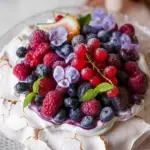
Easy Pavlova
- Prep Time: 20 minutes
- Cook Time: 75 minutes
- Total Time: 1 hour 35 minutes
- Yield: 6 servings 1x
- Category: Dessert
- Method: Baking
- Cuisine: Australian/New Zealand
Description
This Pavlova recipe features a crisp meringue shell with a soft, marshmallow-like center, topped with sweet-tart strawberry rhubarb compote and fresh mint for a light, elegant dessert.
Ingredients
- 4 large egg whites (room temperature)
- 1 cup granulated sugar
- 1 teaspoon cornstarch
- 1 teaspoon white vinegar
- 1 teaspoon vanilla extract
- 1 cup heavy whipping cream or coconut cream
- 2 tablespoons powdered sugar
- 1 teaspoon vanilla extract (for cream)
- 1 cup fresh strawberries, sliced
- 1 cup rhubarb, chopped
- 2–3 tablespoons honey or sugar (for compote)
- 2 tablespoons water
- 2 tablespoons fresh mint leaves, chopped
Instructions
- Preheat oven to 250°F (120°C) and line a baking sheet with parchment paper.
- In a clean bowl, beat egg whites until soft peaks form. Gradually add sugar and continue beating until stiff, glossy peaks form.
- Gently fold in cornstarch, vinegar, and vanilla extract.
- Spoon or pipe meringue into small nests or one large circle, creating a slight indentation in the center.
- Bake for 60–75 minutes, then turn off oven and let pavlova cool completely inside.
- In a saucepan, combine rhubarb, water, and honey or sugar. Cook over medium heat for 8–10 minutes until softened. Let cool, then mix with strawberries.
- Whip cream with powdered sugar and vanilla until soft peaks form.
- Assemble by topping cooled pavlova with whipped cream, fruit mixture, and fresh mint.
- Serve immediately for best texture.
Notes
- Use room-temperature egg whites for better volume.
- Ensure mixing bowl is grease-free for proper whipping.
- Avoid opening the oven during baking to prevent collapse.
- Cool pavlova slowly in the oven to minimize cracks.
- Assemble just before serving to keep the meringue crisp.
- Store leftovers in the refrigerator, though texture may soften.
Nutrition
- Serving Size: 1 serving
- Calories: 220 kcal
- Sugar: 28 g
- Sodium: 35 mg
- Fat: 9 g
- Saturated Fat: 5 g
- Unsaturated Fat: 3 g
- Trans Fat: 0 g
- Carbohydrates: 32 g
- Fiber: 1 g
- Protein: 3 g
- Cholesterol: 25 mg