Polenta with Spring Veggies is the perfect way to celebrate fresh, seasonal ingredients in a comforting yet light dish. This creamy, plant-based recipe combines rich, velvety polenta with vibrant spring vegetables and a burst of zesty gremolata. Whether you’re looking for a healthy dinner idea, a vegetarian comfort meal, or a simple way to enjoy seasonal produce, Polenta with Spring Veggies delivers flavor, texture, and nourishment in every bite.
This dish stands out for its balance—creamy cornmeal paired with crisp-tender vegetables like asparagus, peas, and leeks. It’s easy to prepare, customizable, and ideal for both weeknight dinners and special occasions.
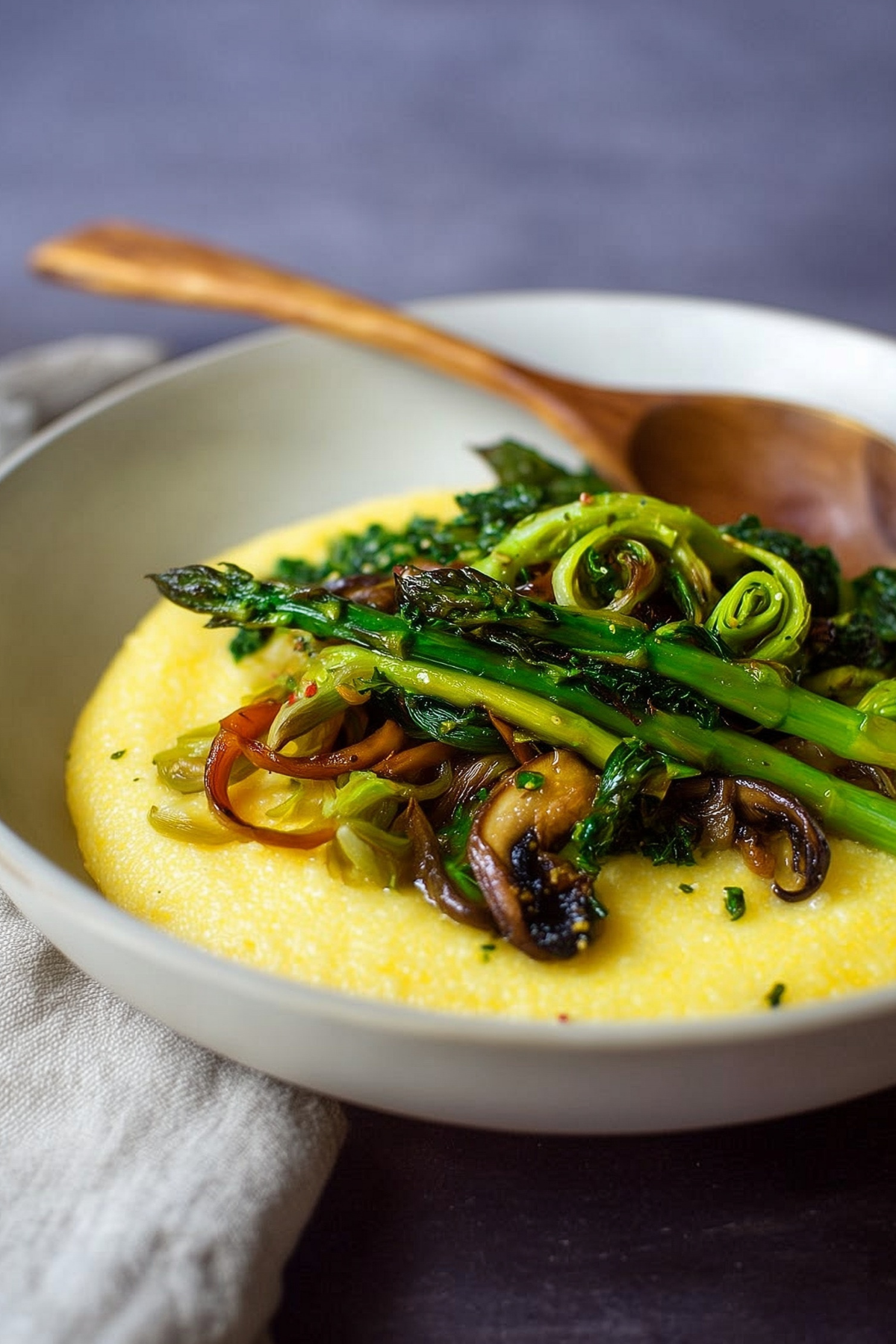
Table of Contents
Why You’ll Love This Polenta with Spring Veggies
Polenta with Spring Veggies is a standout recipe for many reasons. First, it’s incredibly easy to make, requiring just a handful of wholesome ingredients. The creamy texture of the polenta creates a luxurious base, while the fresh vegetables add brightness and crunch.
This recipe is also naturally vegan and gluten-free, making it suitable for a wide range of dietary preferences. It’s packed with nutrients thanks to the seasonal vegetables, and it offers a comforting, hearty feel without being overly heavy.
Another reason to love Polenta with Spring Veggies is its versatility. You can serve it as a main dish or a side, and you can easily swap in whatever vegetables you have on hand. It’s a flexible, forgiving recipe that always delivers satisfying results.
Ingredients for Polenta with Spring Veggies
To make this delicious Polenta with Spring Veggies, you’ll need a mix of pantry staples and fresh produce. Each ingredient plays a key role in building flavor and texture.
• Polenta (cornmeal): The base of the dish, providing a creamy, smooth texture
• Vegetable broth: Adds depth and savory flavor to the polenta
• Olive oil: Enhances richness and helps sauté the vegetables
• Garlic: Brings aromatic intensity and depth
• Leeks or green onions: Offer a mild, sweet onion flavor
• Asparagus: Adds a crisp texture and earthy taste
• Peas: Provide sweetness and a pop of color
• Lemon zest: Brightens the dish with fresh citrus notes
• Parsley: Adds freshness and herbaceous flavor
• Salt and pepper: Essential for seasoning and balance
• Nutritional yeast (optional): Gives a cheesy, umami flavor without dairy
Alternative Ingredient Suggestions for Polenta with Spring Veggies
If you don’t have all the ingredients on hand, there are plenty of substitutions you can use without compromising the flavor of your Polenta with Spring Veggies.
You can replace asparagus with broccoli, zucchini, or green beans for a similar texture. If peas aren’t available, try edamame or chopped spinach. Instead of leeks, yellow onions or shallots work well.
For the polenta, you can use instant polenta to save time, though traditional coarse cornmeal offers better texture. If you’re not strictly vegan, adding Parmesan cheese instead of nutritional yeast can enhance the richness.
These variations allow you to adapt Polenta with Spring Veggies to your pantry while still keeping it fresh and delicious.
Step-by-Step Instructions for Polenta with Spring Veggies
- Begin by bringing vegetable broth to a gentle boil in a medium saucepan. Slowly whisk in the polenta to prevent lumps from forming. Reduce the heat to low and cook, stirring frequently, until the mixture thickens and becomes creamy. This usually takes about 20–30 minutes for traditional polenta.
- While the polenta cooks, heat olive oil in a large skillet over medium heat. Add the garlic and leeks, sautéing until fragrant and softened. This step builds the aromatic base for your Polenta with Spring Veggies.
- Add the asparagus to the skillet and cook for a few minutes until it begins to soften but still retains a slight crunch. Then stir in the peas and cook briefly until heated through.
- Once the polenta is creamy and smooth, season it with salt, pepper, and nutritional yeast if using. Taste and adjust the seasoning as needed.
- Prepare the gremolata by mixing chopped parsley, lemon zest, and a touch of garlic. This fresh topping adds brightness to the Polenta with Spring Veggies.
- To serve, spoon the creamy polenta into bowls and top with the sautéed spring vegetables. Finish with a generous sprinkle of gremolata.
- Serve immediately while warm, ensuring the polenta remains soft and creamy. If it thickens too much, add a splash of broth or water to loosen it.
Tips & Tricks for Perfect Polenta with Spring Veggies
To achieve the best results with Polenta with Spring Veggies, keep a few key tips in mind. Stirring the polenta regularly is crucial to prevent clumping and ensure a smooth texture. Using a whisk in the beginning helps distribute the cornmeal evenly.
Avoid overcooking the vegetables. Spring veggies should remain vibrant and slightly crisp to contrast with the creamy polenta. Overcooked vegetables can become mushy and lose their fresh appeal.
If your polenta becomes too thick, simply add more liquid and stir until it reaches your desired consistency. Polenta naturally thickens as it cools, so serve it right away for the best texture.
For extra flavor, consider adding a drizzle of high-quality olive oil or a squeeze of lemon juice just before serving your Polenta with Spring Veggies.
Pairing Ideas and Variations for Polenta with Spring Veggies
Polenta with Spring Veggies pairs beautifully with a variety of sides and toppings. A crisp green salad with a light vinaigrette complements the richness of the polenta. You can also serve it alongside roasted vegetables or a simple soup for a complete meal.
For added protein, consider topping your Polenta with Spring Veggies with roasted chickpeas, white beans, or grilled tofu. These additions make the dish more filling and balanced.
If you enjoy a bit of spice, add red pepper flakes or a drizzle of chili oil. For a richer variation, stir in a plant-based butter or cream alternative into the polenta.
This dish also works well as a make-ahead meal. Store leftovers in the refrigerator and reheat gently with added liquid to restore creaminess.
Seasonal and Nutritional Benefits of Polenta with Spring Veggies
Polenta with Spring Veggies is not only delicious but also packed with nutritional benefits. Spring vegetables like asparagus and peas are rich in vitamins, fiber, and antioxidants. They support digestion and overall health while adding vibrant color to your plate.
Polenta itself is a great source of complex carbohydrates, providing steady energy without being overly heavy. When combined with fresh vegetables, this dish becomes a well-rounded, nourishing meal.
Eating seasonally also means better flavor and higher nutrient content. Polenta with Spring Veggies highlights the best of spring produce, making it a smart and tasty choice for this time of year.
This recipe encourages mindful eating by focusing on whole, simple ingredients prepared in a way that enhances their natural flavors.
Conclusion: A Fresh Take on Polenta with Spring Veggies
Polenta with Spring Veggies is a beautiful combination of comfort and freshness, making it a standout dish for any occasion. The creamy texture of the polenta pairs perfectly with the crisp, vibrant vegetables, while the bright gremolata ties everything together with a burst of flavor. It’s a recipe that feels both indulgent and nourishing at the same time.
What makes Polenta with Spring Veggies truly special is its simplicity and adaptability. You can easily adjust the ingredients based on what’s in season or available in your kitchen. Whether you’re cooking for a family dinner or preparing a healthy meal for yourself, this dish delivers consistent, satisfying results.
By embracing seasonal produce and wholesome ingredients, Polenta with Spring Veggies becomes more than just a recipe—it becomes a go-to meal that celebrates flavor, nutrition, and ease. Once you try it, it’s sure to become a regular part of your meal rotation.
FAQs About Polenta with Spring Veggies
What is the best type of polenta for Polenta with Spring Veggies?
For the best Polenta with Spring Veggies, use coarse-ground cornmeal or traditional polenta. It creates a richer, creamier texture compared to instant polenta. However, instant polenta can be used if you’re short on time, though the texture may be slightly less robust.
Can I make Polenta with Spring Veggies ahead of time?
Yes, Polenta with Spring Veggies can be made ahead. Store the polenta and vegetables separately in airtight containers in the refrigerator. When reheating, add a bit of broth or water to the polenta to restore its creamy consistency before serving.
How do I keep polenta creamy in Polenta with Spring Veggies?
To keep your Polenta with Spring Veggies creamy, stir it frequently while cooking and add enough liquid. If it thickens too much after cooking, simply whisk in more warm broth or water until it reaches the desired texture.
More Relevant Recipes
Print
Easy Polenta with Spring Veggies
- Prep Time: 10 minutes
- Cook Time: 30 minutes
- Total Time: 40 minutes
- Yield: 4 servings 1x
- Category: Main Course
- Method: Stovetop
- Cuisine: Italian-Inspired
Description
Polenta with Spring Veggies is a creamy, comforting vegan dish made with rich cornmeal, fresh seasonal vegetables like asparagus and peas, and topped with a bright lemony gremolata for a fresh and flavorful finish.
Ingredients
- 1 cup polenta (coarse cornmeal)
- 4 cups vegetable broth
- 2 tablespoons olive oil
- 3 cloves garlic, minced
- 1 leek, thinly sliced (or 3 green onions)
- 1 bunch asparagus, trimmed and cut into 2-inch pieces
- 1 cup fresh or frozen peas
- 1/4 cup nutritional yeast (optional)
- 1/2 teaspoon salt (or to taste)
- 1/4 teaspoon black pepper
- 1/4 cup fresh parsley, finely chopped
- 1 tablespoon lemon zest
- 1 tablespoon lemon juice
Instructions
- Bring the vegetable broth to a gentle boil in a medium saucepan over medium heat.
- Slowly whisk in the polenta, stirring constantly to prevent lumps from forming.
- Reduce heat to low and cook for 20–30 minutes, stirring frequently until the polenta becomes thick and creamy.
- While the polenta cooks, heat olive oil in a large skillet over medium heat.
- Add minced garlic and sliced leeks, sautéing for 3–4 minutes until soft and fragrant.
- Add asparagus and cook for 4–5 minutes until tender-crisp.
- Stir in peas and cook for another 2 minutes until heated through.
- Season vegetables with a pinch of salt and pepper, then remove from heat.
- Stir nutritional yeast, salt, and pepper into the cooked polenta, adjusting seasoning as needed.
- In a small bowl, mix parsley, lemon zest, and lemon juice to create the gremolata.
- Spoon the creamy polenta into serving bowls and top with sautéed spring vegetables.
- Finish with a generous sprinkle of gremolata and serve immediately.
Notes
- Stir polenta frequently to prevent clumping and ensure a smooth texture.
- If polenta thickens too much, add warm broth or water to loosen it.
- Do not overcook the vegetables; they should remain vibrant and slightly crisp.
- Instant polenta can be used for quicker preparation but may have a softer texture.
- Store leftovers in the refrigerator for up to 3 days and reheat with added liquid.
Nutrition
- Serving Size: 1 bowl
- Calories: 320 kcal
- Sugar: 5 g
- Sodium: 480 mg
- Fat: 10 g
- Saturated Fat: 1.5 g
- Unsaturated Fat: 8 g
- Trans Fat: 0 g
- Carbohydrates: 48 g
- Fiber: 6 g
- Protein: 9 g
- Cholesterol: 0 mg