Spring Minestrone Soup is a vibrant and nourishing Italian-style vegetable soup that celebrates the best of the season with tender spring vegetables, beans, and small pasta in a fragrant broth. Perfect for lunch or a light dinner, this spring minestrone soup brings simplicity and flavor together in a bowl that’s both wholesome and comforting. With bright asparagus, spring onions, kale, and chickpeas, this spring vegetable soup showcases fresh produce at its peak and delivers a satisfying yet light meal.
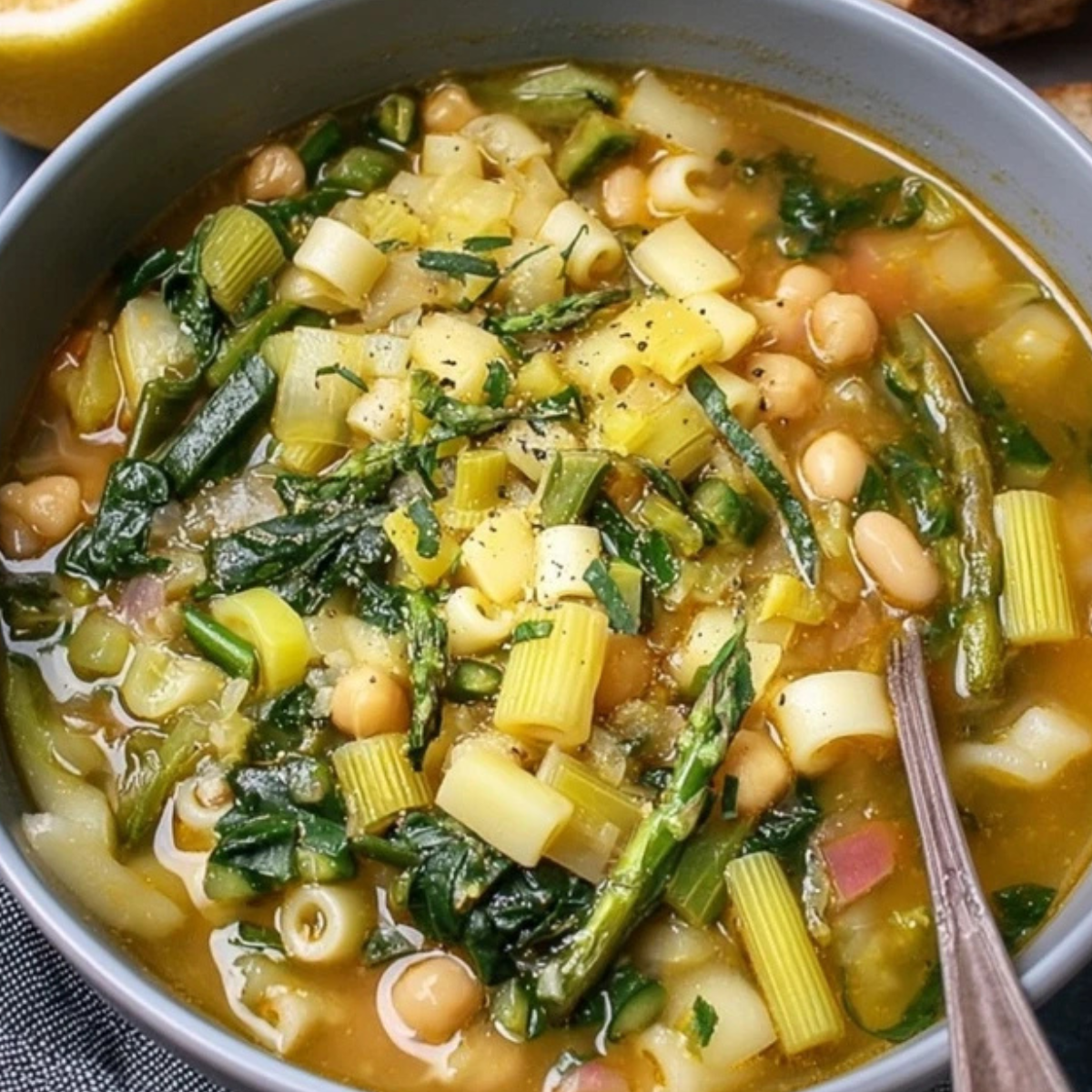
Table of Contents
Spring Minestrone Soup is ideal when the weather warms and markets overflow with seasonal vegetables. Unlike heavier winter soups, this spring minestrone feels bright and refreshing while still hearty enough to fill you up. Whether you’re cooking for family meals or meal-prepping for the week, this soup is flexible, wholesome, and deeply flavorful.
Why Spring Minestrone Soup Is a Seasonal Favorite
Spring Minestrone Soup stands out because it highlights fresh spring vegetables and aromatic herbs. It combines seasonal produce like asparagus, zucchini, and spring onions with protein-rich chickpeas and ditalini pasta to create a balanced meal in a bowl. Unlike traditional winter minestrone, the spring version leans lighter and brighter, capturing the essence of the season.
This spring vegetable soup is also naturally vegan and can easily be adapted for gluten-free diets with pasta swaps. Its versatility makes it perfect for any table, whether you’re hosting dinner or enjoying a quiet weekday lunch. The mix of textures—crisp vegetables, tender pasta, and creamy chickpeas—adds satisfying complexity to every spoonful.
Fresh Spring Minestrone Soup Ingredients and Their Roles
• Spring Onions: Provide mild onion flavor and fresh aroma that brightens the broth.
• Celery: Adds a subtle vegetal crunch and classic soup base flavor.
• Asparagus: The star spring vegetable, tender and flavorful, giving the soup its seasonal identity.
• Zucchini: Contributes gentle sweetness and soft texture.
• Fresh Rosemary & Thyme: Herbaceous notes that elevate the broth’s depth.
• Chickpeas: Plant-based protein and creamy texture that make the soup more filling.
• Kale: Adds earthiness, fiber, and rich green color.
• Ditalini Pasta: Small pasta pieces add body and chew without overwhelming the spring flavors.
• Vegetable Stock: Savory foundation for the broth that ties all ingredients together.
• Garlic: Deep aromatic base flavor.
• Lemon Juice: Brightens and balances the broth with acidity.
• Olive Oil: Adds richness and helps sauté the aromatics.
• Salt & Pepper: Essential seasoning to enhance all other flavors.
Flavor and Texture Swaps for Spring Minestrone Soup
If you want to adapt this spring minestrone soup for different tastes or dietary needs, try these helpful swaps:
• Gluten-free pasta: Use gluten-free ditalini or small shell pasta to make the soup gluten-free.
• White beans: Substitute chickpeas with cannellini beans for a creamier feel.
• Different greens: Swap kale for spinach or Swiss chard for a softer texture.
• Herb variations: Use basil or parsley if you prefer milder herb notes over rosemary or thyme.
• Pesto drizzle: Add a swirl of vegan pesto just before serving for extra herbal richness.
These alternatives keep the spirit of spring minestrone soup alive while accommodating pantry limitations or personal preferences.
How to Make Spring Minestrone Soup
- Heat the olive oil in a large soup pot over medium heat. Add the chopped spring onions and garlic, sautéing until fragrant and slightly softened.
- Add the diced celery, asparagus, and zucchini to the pot, stirring to combine with the aromatics. Cook for another couple of minutes to begin softening the vegetables.
- Pour in the vegetable stock and bring the mixture to a gentle simmer. Add chopped rosemary and thyme, then season with salt and pepper. Allow the broth to simmer for about 10 minutes so the flavors meld and the vegetables begin to tenderize.
- Stir in the chickpeas and kale, and continue cooking until the kale begins to wilt.
- Add the ditalini pasta to the simmering soup, cooking until al dente. Be sure to check the pasta’s texture so it doesn’t overcook.
- Once the pasta is tender, remove the pot from heat and stir in freshly squeezed lemon juice for brightness. Adjust seasoning with salt and pepper to taste.
- Serve the spring minestrone soup hot, pairing it with crusty bread or a simple salad if desired. This spring minestrone soup makes a complete meal on its own.
This method ensures fresh vegetables retain some texture while infusing the broth with deep spring flavors.
Spring Minestrone Soup Cooking Tips & Tricks
To elevate your spring minestrone soup every time, keep these practical tips in mind:
• Don’t overcook spring vegetables: Asparagus and zucchini become mushy if overcooked—add them later in the simmering process.
• Check pasta early: Pasta continues to absorb broth as the soup cools, so cook it just until tender but firm.
• Season gradually: Add salt in stages so you can adjust without over-salting.
• Use fresh herbs when possible: Fresh rosemary and thyme provide brighter flavors than dried.
• Add lemon at the end: Fresh lemon juice lifts the soup’s flavors without dulling during cooking.
These small adjustments help maintain texture and clarity of flavor in your spring minestrone soup.
Serving Suggestions and Delicious Variations
Spring Minestrone Soup pairs wonderfully with light sides and fresh toppings:
• Crusty Bread: A slice of sourdough or whole-grain bread for dipping complements the broth.
• Parmesan Shavings: For non-vegan versions, shaved Parmesan adds savory richness.
• Herb Oil Drizzle: A simple parsley and olive oil drizzle brightens each bowl.
• Add Peas: Sweet spring peas boost sweetness and color.
• Lemon Zest: A hint of lemon zest on top enhances freshness.
For variations, consider a version with additional spring vegetables like fresh peas or artichokes, or make a heartier batch with small diced potatoes. You can also turn this spring minestrone soup into a freezer-friendly lunch by storing portions in airtight containers for up to three months.
Why Spring Minestrone Soup Belongs in Your Meal Rotation
Spring Minestrone Soup is more than a seasonal soup—it’s a celebration of spring’s bounty in every bowl. With bright flavors, fresh produce, and satisfying texture, this soup hits all the right notes for healthy yet comforting meals. Its adaptability makes it perfect for busy weeknights, relaxed weekend lunches, or meal prepping ahead. As spring arrives and markets fill with crisp greens and early vegetables, this spring minestrone soup is an ideal way to enjoy the season’s best.
Conclusion: A Fresh Way to Enjoy Spring Minestrone Soup
Spring Minestrone Soup is the kind of recipe that fits effortlessly into everyday cooking while still feeling special. With its colorful mix of spring vegetables, tender pasta, and herb-infused broth, this soup delivers comfort without heaviness. It’s light enough for warmer days, yet satisfying enough to serve as a complete meal. Whether you’re cooking for family, preparing lunches for the week, or looking for a seasonal way to enjoy more vegetables, spring minestrone soup offers a reliable, flavorful option you’ll come back to again and again.
The beauty of spring minestrone soup lies in its flexibility. You can follow the classic version or adjust the vegetables, beans, and herbs based on what’s fresh or already in your kitchen. Each batch turns into a slightly new experience while still keeping that bright, nourishing character that defines a good spring vegetable soup. Once you try it, it’s easy to see why this seasonal favorite deserves a regular place in your meal rotation.
FAQ: Can I make Spring Minestrone Soup ahead of time?
Can I make Spring Minestrone Soup ahead of time?
Yes, spring minestrone soup is perfect for making ahead. You can prepare the full soup, let it cool, and store it in an airtight container in the refrigerator for up to four days. If you plan to make it well in advance, consider cooking the pasta separately and adding it when reheating to prevent it from absorbing too much broth and becoming soft.
Is Spring Minestrone Soup freezer-friendly?
Spring minestrone soup can be frozen, but for best texture, freeze it without the pasta. Cook and cool the soup base, then freeze it in portions for up to three months. When ready to serve, reheat the soup and add freshly cooked pasta. This keeps the vegetables bright and the broth balanced.
How can I make Spring Minestrone Soup more filling?
To make spring minestrone soup heartier, you can add extra beans, small diced potatoes, or even quinoa instead of pasta. A swirl of pesto or a sprinkle of Parmesan (or a vegan alternative) also adds richness and depth, turning this spring vegetable soup into a more substantial meal.
What vegetables work best if I don’t have all the spring produce?
Spring minestrone soup is very forgiving. If asparagus or zucchini aren’t available, you can use green beans, peas, carrots, or spinach. The key is choosing tender vegetables that cook quickly and complement the light, fresh character of spring minestrone soup.
More Relevant Recipes
- Chicken Noodle Soup – Creamy & Comforting Recipe
- Mediterranean Lamb Stew – Flavorful One-Pot Meal
- Old Fashioned Potato Soup – Easy Comfort Classic

Spring Minestrone Soup
- Prep Time: 15 minutes
- Cook Time: 25 minutes
- Total Time: 40 minutes
- Yield: 4 servings 1x
- Category: Soup
- Method: Stovetop
- Cuisine: Italian
- Diet: Vegan
Description
Spring Minestrone Soup is a light, colorful Italian-style vegetable soup made with fresh spring vegetables, tender pasta, chickpeas, and fragrant herbs simmered in a savory vegetable broth. Bright, comforting, and nourishing, it’s perfect for an easy lunch or a wholesome dinner during the warmer months.
Ingredients
- 2 tablespoons olive oil
- 4 spring onions, finely chopped
- 3 cloves garlic, minced
- 2 celery stalks, diced
- 1 1/2 cups asparagus, cut into 1-inch pieces
- 1 medium zucchini, diced
- 1 teaspoon fresh rosemary, finely chopped
- 1 teaspoon fresh thyme leaves
- 6 cups vegetable broth
- 1 can (15 oz) chickpeas, drained and rinsed
- 2 cups chopped kale (stems removed)
- 3/4 cup ditalini pasta
- 1 tablespoon fresh lemon juice
- 3/4 teaspoon salt (or to taste)
- 1/2 teaspoon black pepper
Instructions
- Heat olive oil in a large pot over medium heat. Add the chopped spring onions and garlic, and sauté for 2–3 minutes until soft and fragrant.
- Stir in the celery, asparagus, and zucchini. Cook for about 3 minutes, stirring occasionally, until the vegetables begin to soften.
- Add the rosemary, thyme, vegetable broth, salt, and pepper. Bring to a gentle boil, then reduce heat and simmer for 10 minutes.
- Stir in the chickpeas and chopped kale. Simmer for another 3 minutes until the kale wilts.
- Add the ditalini pasta and cook according to package directions, about 8–10 minutes, until al dente.
- Remove the pot from heat and stir in the lemon juice. Taste and adjust seasoning if needed.
- Serve hot, optionally topped with fresh herbs or grated Parmesan-style topping.
Notes
- For best texture, avoid overcooking the pasta as it continues to soften in the broth.
- You can cook the pasta separately and add it before serving if planning to store leftovers.
- Swap kale with spinach or Swiss chard for a softer green.
- Add fresh peas or green beans for extra spring flavor.
- This soup tastes even better the next day as the flavors develop.
Nutrition
- Serving Size: 1 bowl
- Calories: 240 kcal
- Sugar: 6 g
- Sodium: 620 mg
- Fat: 7 g
- Saturated Fat: 1 g
- Unsaturated Fat: 5 g
- Trans Fat: 0 g
- Carbohydrates: 34 g
- Fiber: 7 g
- Protein: 9 g
- Cholesterol: 0 mg