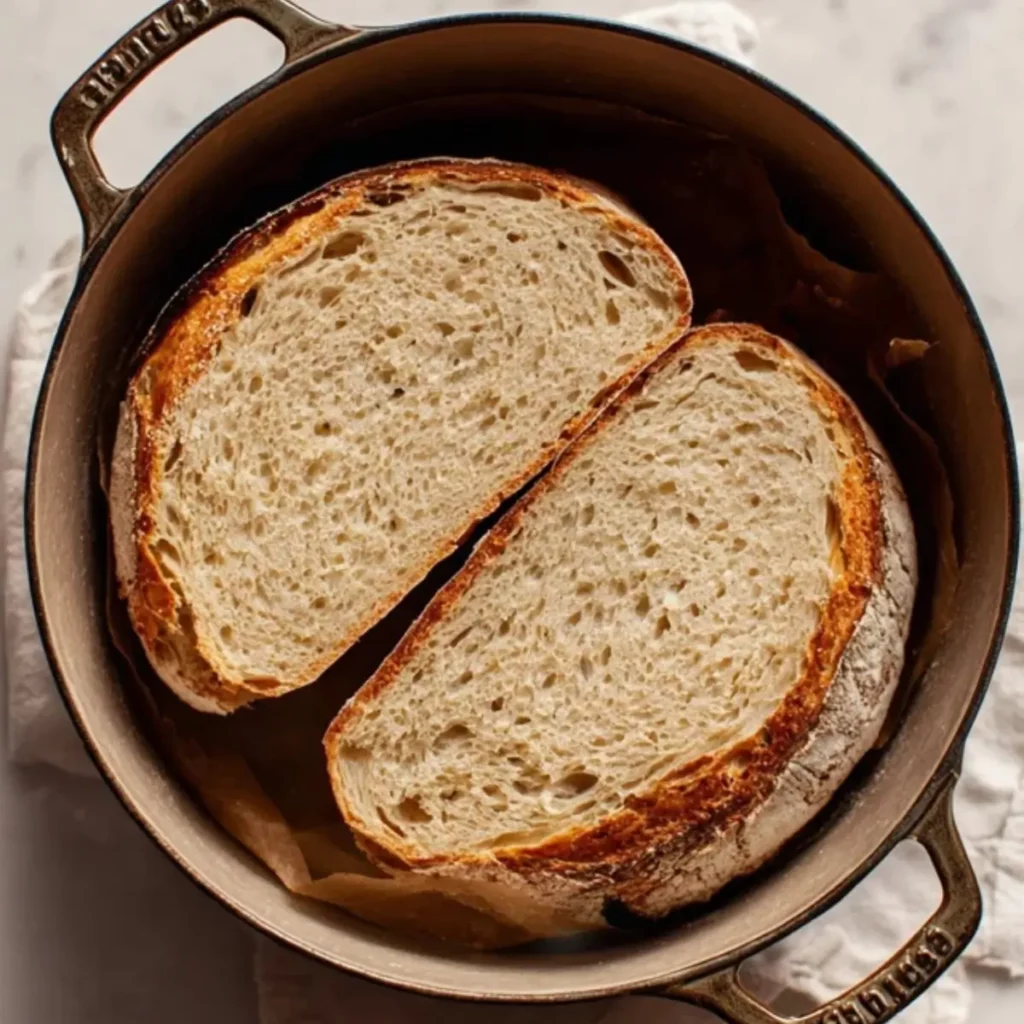
Making the perfect Dutch oven sourdough bread can seem intimidating at first, but with the right recipe and a little patience, you’ll have a beautifully golden, crispy loaf that’s full of flavor. Whether you’re a beginner or a seasoned baker, this simple yet rewarding recipe will guide you step by step toward creating a classic sourdough boule. Let’s explore how you can achieve that perfect rise, crispy crust, and chewy interior.
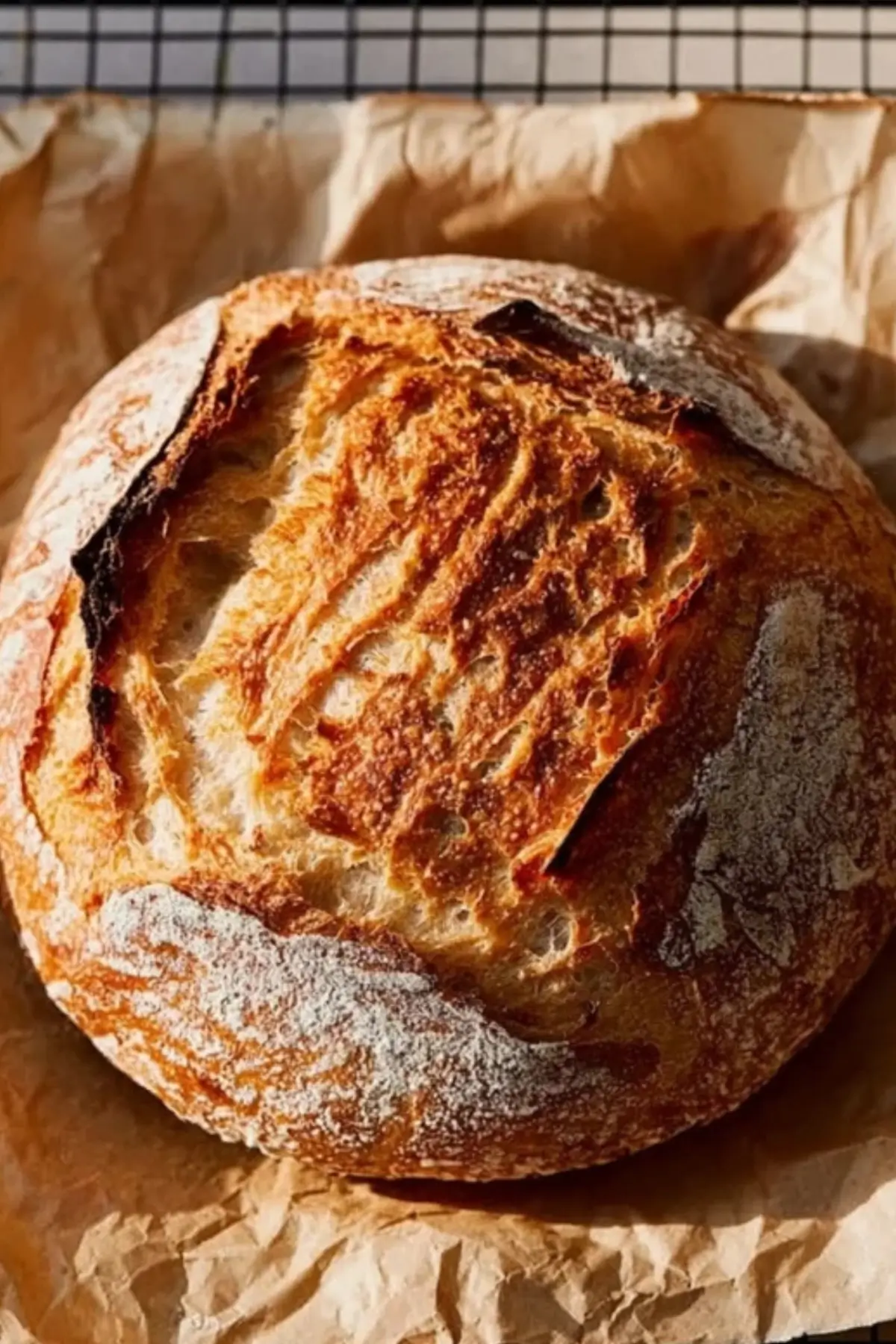
Table of Contents
Why Dutch Oven Sourdough Bread Is a Must-Try
The allure of Dutch oven sourdough bread lies in its simplicity and the superior results it yields. Not only does the Dutch oven help create the ideal environment for rising and baking, but it also retains heat, giving the bread its signature crust. This recipe is perfect for anyone looking for a healthier alternative to store-bought bread with its natural fermentation process that makes it easier to digest.
Ingredients for Dutch Oven Sourdough Bread
To get started with your Dutch oven sourdough bread, you’ll need the following ingredients. Each one plays a key role in giving the bread its unique texture and flavor:
• Sourdough Starter: The foundation for fermentation, contributing to flavor and leavening.
• Bread Flour: Gives structure and a chewy texture to the bread.
• Water: Hydrates the dough, allowing it to rise and form its airy structure.
• Sea Salt: Enhances flavor and helps with dough development.
• Spray Bottle with Fresh Water: This helps with stretching and folding the dough without adding too much flour.
• Dutch Oven: A 5.5 to 6-quart Dutch oven is perfect for baking your bread, ensuring even heat distribution and a crispy crust.
• Proofing Basket: Helps the dough maintain its shape while it rises.
Alternative Ingredient Suggestions
If you’re looking for substitutions or variations, here are some ideas:
• Flour Options: You can swap bread flour with unbleached all-purpose flour if that’s what you have on hand.
• Water: For a more refined flavor, you could try using filtered water instead of tap water.
• Salt: If you prefer a less salty bread, reduce the amount of salt to suit your taste.
• Dutch Oven Alternatives: If you don’t have a Dutch oven, you can use a heavy pot with a lid, though the results might vary slightly.
Step-by-Step Instructions for Dutch Oven Sourdough Bread
Now, let’s get into the process of making your own Dutch oven sourdough bread.
- Mix Ingredients: In a large bowl, combine your sourdough starter, flour, salt, and water. Stir until a dough forms.
- Stretch and Fold: Mist your clean countertop and hands with water. Turn the dough onto the surface and stretch the top over the bottom, folding side to side. Repeat this for about 6 hours, allowing the dough to rest between folds.
- Pre-shape the Dough: After your dough has been stretched and folded, shape it gently into a round boule. Let it rest for 1 hour.
- Shape the Dough: Flip your dough over, fold again, and shape it into a round loaf. Place it into a flour-coated proofing basket and cover it. Let it rise overnight in the fridge.
- Preheat the Dutch Oven: The next day, preheat your oven and Dutch oven to 450°F (232°C).
- Bake the Bread: Once your oven is hot, score the top of your dough and carefully transfer it into the preheated Dutch oven. Cover and bake for 30 minutes. Then remove the lid and bake for another 20-30 minutes to achieve a golden crust.
- Cool the Bread: Once baked, remove the loaf from the Dutch oven and let it cool on a wire rack for at least 1 hour before slicing.
Tips & Tricks for Perfect Dutch Oven Sourdough Bread
Achieving the perfect Dutch oven sourdough bread takes practice. Here are some tips to ensure your bread turns out just right:
• Avoid Over-Flouring: Do not use flour on your countertop when stretching and folding. Instead, spray your hands and surface with water to prevent sticking without weighing down the dough.
• Adjust Proofing Time: The time between stretches depends on your home’s temperature. If it’s above 75°F, you can reduce the resting time to one hour.
• Don’t Skip the Resting Time: Allow the dough plenty of time to rest and rise. This step is crucial for developing the flavor and texture of the bread.
Pairing Ideas and Variations for Dutch Oven Sourdough Bread
While your Dutch oven sourdough bread is delicious on its own, here are some ways to enjoy it:
• Toppings: Spread butter, olive oil, or your favorite jam on a warm slice for a simple treat.
• Pairings: Serve alongside soups, stews, or salads for a hearty meal.
• Sourdough Variations: Fold in herbs, nuts, or cheese for a twist on the classic recipe. You could also try adding a bit of dried fruit for a slightly sweet variation.
Health Benefits of Dutch Oven Sourdough Bread
Dutch oven sourdough bread offers numerous health benefits due to the fermentation process. The wild yeasts used in sourdough fermentation help break down the phytic acid in the flour, making the bread more digestible and allowing your body to absorb more nutrients like magnesium, potassium, and zinc. The longer fermentation process also means that sourdough bread has a lower glycemic index, making it a better option for those managing blood sugar levels.
Conclusion
Baking Dutch oven sourdough bread at home is a rewarding experience that brings the timeless art of breadmaking right into your kitchen. With its perfect balance of crispy crust and chewy interior, it’s no wonder why so many bakers, both beginner and seasoned, swear by this method. Not only does this recipe provide step-by-step instructions for achieving the best results, but it also allows room for creativity, whether you’re folding in herbs or nuts for added flavor. While it may take some time and patience, the end result is always worth the effort. So, don’t hesitate to try your hand at this delightful bread recipe and enjoy the fresh, homemade goodness that only sourdough can offer.
FAQs About Dutch Oven Sourdough Bread
Can I use all-purpose flour instead of bread flour for this recipe?
Yes, you can use all-purpose flour if you don’t have bread flour. However, bread flour has a higher protein content, which helps create a chewier and more structured loaf. If you use all-purpose flour, your bread may be a little softer, but it will still taste delicious.
How long does it take for sourdough bread to rise?
The rising time for sourdough bread can vary depending on the temperature in your home. Generally, the dough needs to rise for 8 to 12 hours in the fridge after shaping. Additionally, during the stretch and fold process, you should allow for about 6 hours, with 30-minute to 2-hour intervals between each fold.
Can I make this recipe without a Dutch oven?
While a Dutch oven is ideal for creating the perfect crust, you can still bake sourdough bread without one. Simply place your dough on a baking sheet lined with parchment paper, cover it with a large metal bowl, or create steam by placing a pan of water at the bottom of the oven.
More Relevant Recipes
Print
Dutch Oven Sourdough Bread
- Prep Time: 20 minutes
- Cook Time: 1 hour
- Total Time: 1 hours 20 minutes
Description
This Dutch oven sourdough bread recipe produces a delicious, homemade loaf with a crispy crust and chewy interior. Perfect for beginners and seasoned bakers alike, it requires minimal ingredients but yields impressive results.
Ingredients
- 500 grams Organic Bread Flour
- 300 grams Water
- 100 grams Sourdough Starter
- 10–15 grams Sea Salt
Instructions
- In a large bowl, combine the starter, flour, salt, and water. Knead the ingredients together until a uniform dough ball forms.
- Mist your clean countertop and hands with water. Turn the dough onto the surface and stretch the top over the bottom, folding side to side. Repeat for about 6 hours, allowing the dough to rest between folds.
- After stretching and folding, shape the dough into a round boule. Let it rest for 1 hour.
- Flip the dough over and fold it again to shape it into a loaf. Place it in a flour-coated proofing basket and cover it. Let it rise overnight in the fridge.
- Preheat your Dutch oven to 450°F (232°C) while you prepare the dough.
- Score the top of your dough and carefully transfer it to the preheated Dutch oven. Cover and bake for 30 minutes. Then remove the lid and bake for another 20-30 minutes to achieve a golden crust.
- Remove the bread from the Dutch oven and allow it to cool on a wire rack for at least 1 hour before slicing.
Notes
- Do not use a floured surface for stretching and folding; instead, use water to prevent the dough from sticking.
- The dough’s resting time may vary depending on your home’s temperature, but the total proofing time will generally be 8-12 hours in the fridge.
- If you don’t have a Dutch oven, you can use a heavy pot or baking sheet with a bowl covering it to retain moisture and heat.
- For added flavor, you can incorporate herbs, nuts, or cheese into the dough before baking.
Nutrition
- Serving Size: 1 slice (approx. 1/12 of loaf)
- Calories: 150
- Sugar: 0g
- Sodium: 200mg
- Fat: 1g
- Saturated Fat: 0g
- Unsaturated Fat: 1g
- Trans Fat: 0g
- Carbohydrates: 31g
- Fiber: 2g
- Protein: 5g
- Cholesterol: 0mg